The Complete Guide to Coasters
Few home accessories are as quietly hardworking as the coaster. Small enough to be overlooked, yet essential enough that their absence is immediately felt — in the form of a water ring on a wooden table or a heat mark on a polished surface. A well-chosen set of coasters protects your furniture, adds a considered finishing touch to your table setting, and reflects something about your personal style. This guide covers everything you need to know about choosing, using, and caring for coasters, whatever your home and however you like to entertain.
What Are Coasters For?
Coasters serve two primary functions: protecting surfaces from moisture and heat. Cold drinks cause condensation to form on the outside of a glass, and without a coaster beneath it, that moisture transfers directly to the surface below — leaving water rings on wood, staining stone, or marking lacquered finishes. Hot drinks present a different risk: mugs and teapots can transfer enough heat to damage or discolour sensitive surfaces over time. A coaster acts as a barrier between the vessel and the surface, absorbing or deflecting both moisture and heat before they can cause harm.
Beyond their protective function, coasters have become a genuine home accessory — an opportunity to introduce texture, colour, or material interest to a table or sideboard. A set of coasters left on display says something about the home it belongs to, and the best designs are chosen as much for how they look as for what they do.
Types of Coaster
Stainless Steel Coasters
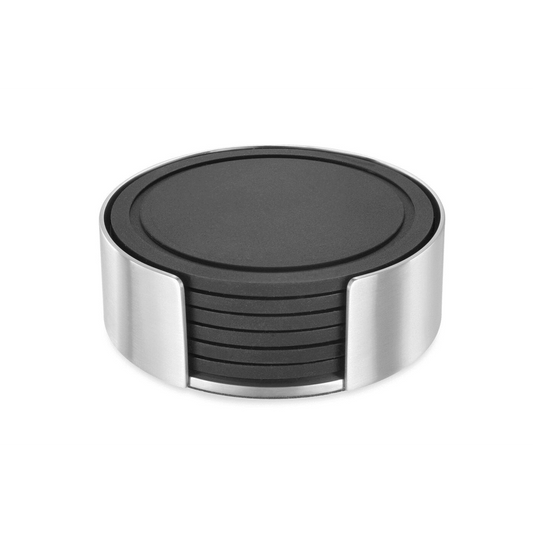
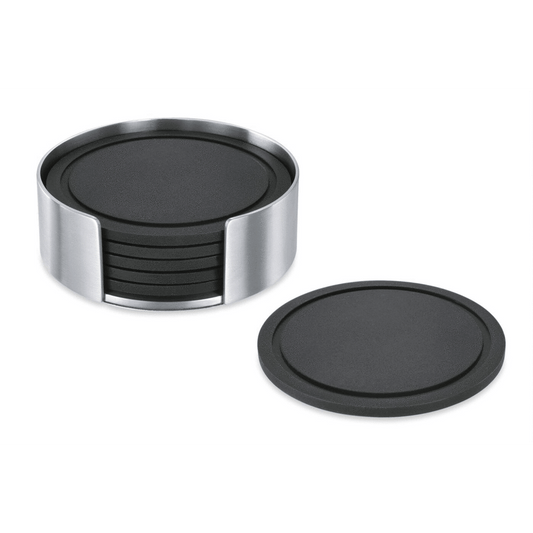
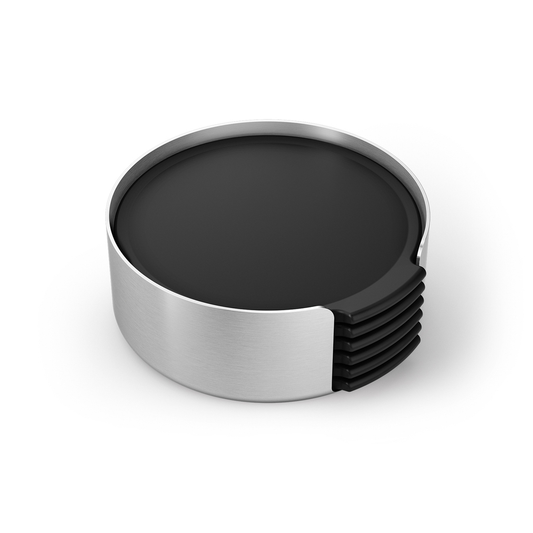
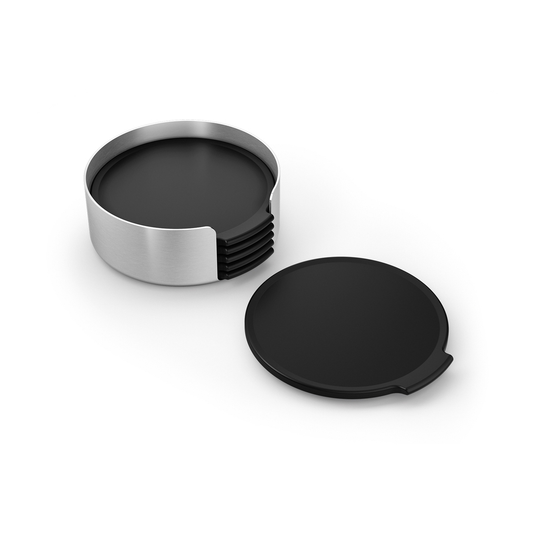
Stainless steel coasters are the choice for contemporary, design-led interiors. Precision-engineered and built to last, they offer a clean, modern aesthetic that suits both kitchen and dining room settings. High-grade stainless steel is non-porous, hygienic, and resistant to staining — making it easy to wipe clean after use. Many stainless steel coaster sets come with a matching stand or holder, keeping the set neatly organised on the table and ready to use. Brushed and hammered finishes add tactile interest while reducing the visibility of fingerprints and minor marks.
Cork Coasters
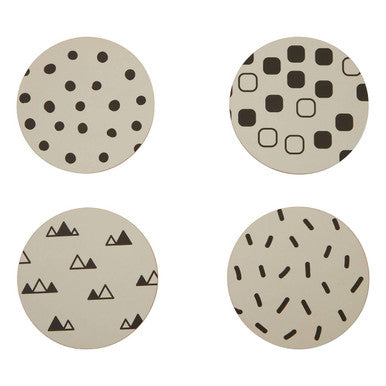
Cork is one of the most traditional coaster materials, and it remains popular for good reason. It is naturally absorbent, which means it draws moisture away from the base of a glass rather than simply deflecting it. Cork is also soft enough not to scratch delicate surfaces, and its natural texture provides grip, keeping glasses stable. Cork coasters suit relaxed, natural, or Scandi-influenced interiors particularly well, and they are available in a range of shapes, sizes, and surface designs — from plain natural cork to printed tile-effect patterns.
Felt Coasters
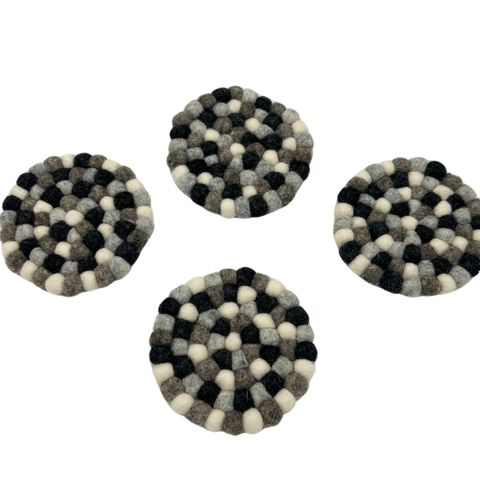
Felt coasters — particularly those made from compressed wool felt balls — bring warmth, colour, and a handcrafted quality to the table. They are soft underfoot, gentle on surfaces, and available in a wide range of colours and patterns, making them a popular choice for homes that favour texture and personality over minimalism. Felt coasters are lightweight and easy to store, and their tactile quality makes them a natural fit for family homes, creative interiors, and spaces where comfort and colour are priorities.
Silicone and Mixed-Material Coasters
Some coaster designs combine materials for enhanced performance — for example, a stainless steel frame with a silicone insert that provides grip and moisture absorption while maintaining a sleek exterior profile. Mixed-material coasters offer the best of both worlds: the visual appeal of metal or stone with the practical benefits of a softer, more absorbent inner surface. They are a good choice for households where both aesthetics and practicality are non-negotiable.
How to Choose the Right Coasters
Choosing the right coasters comes down to three things: your interior style, your surface type, and how you use them day to day. Consider the following:
- Interior style: Stainless steel suits contemporary and industrial interiors; cork and felt work well in natural, Scandi, or eclectic spaces; mixed-material designs bridge the gap between the two.
- Surface sensitivity: If you have polished wood, marble, or lacquered furniture, prioritise coasters with a soft or absorbent underside that won't scratch or mark the surface.
- Heat protection: If you regularly place hot mugs or teapots on your table, look for coasters with good thermal resistance — cork and thick felt both perform well here.
- Set size: Consider how many coasters you need. Sets of four suit most households; sets of six are better for regular entertaining. A matching stand or holder keeps the set tidy and accessible.
- Ease of cleaning: Stainless steel and silicone are the easiest to wipe clean. Cork and felt require more care — avoid soaking and allow to air dry thoroughly after use.
Coasters with Stands and Holders
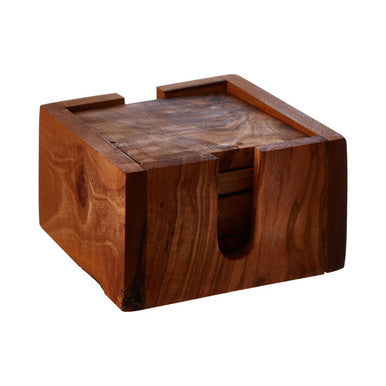
A coaster set with a matching stand or holder is a practical and aesthetically pleasing solution for the dining table or sideboard. Rather than stacking coasters in a drawer or leaving them scattered across the table, a holder keeps the set upright, organised, and immediately accessible. Many stainless steel coaster sets include a precision-engineered holder that complements the coasters in finish and form, creating a cohesive tabletop accessory that looks as good between uses as it does in service. If you entertain regularly, a coaster set with a holder is a worthwhile investment.
Caring for Your Coasters
The right care routine will keep your coasters looking their best and extend their working life significantly. Stainless steel coasters can be wiped clean with a damp cloth and dried immediately to prevent water spots; a small amount of stainless steel cleaner will restore the finish if needed. Cork coasters should be wiped rather than soaked, and allowed to air dry completely before stacking or storing. Felt coasters can be spot-cleaned with a damp cloth and mild detergent; avoid machine washing, which can cause felt to shrink or distort. Silicone inserts are generally the most forgiving and can be rinsed under running water and left to dry.
Frequently Asked Questions
What is the best material for coasters?
There is no single best material — it depends on your priorities. Stainless steel is the most durable and easiest to clean, making it ideal for everyday use in contemporary homes. Cork is naturally absorbent and gentle on surfaces, making it a practical choice for households with sensitive furniture. Felt adds warmth and colour but requires more careful maintenance. Mixed-material designs offer a balance of aesthetics and performance. The best coaster is the one that suits your home, your surfaces, and how you live.
How many coasters do I need?
For most households, a set of four is sufficient for everyday use. If you regularly entertain or have a larger dining table, a set of six gives you more flexibility. It's also worth having a spare set in a different room — one for the living room coffee table and one for the dining table, for example — so you're never caught short.
Do coasters protect against heat as well as moisture?
Yes, though the level of heat protection varies by material. Cork and thick felt provide good thermal insulation and are well suited to hot mugs and teapots. Stainless steel conducts heat more readily, so it is better suited to cold drinks. If heat protection is a priority, look for coasters with a cork or felt base, or a silicone insert that provides a thermal barrier between the vessel and the surface.
Are coasters dishwasher safe?
This depends on the material. Stainless steel coasters are generally not recommended for the dishwasher, as the high temperatures and harsh detergents can affect the finish over time. Cork and felt coasters should never go in the dishwasher — hand cleaning only. Silicone components are usually more dishwasher-tolerant, but always check the manufacturer's guidance for the specific product.
Can I use coasters on all surface types?
Coasters are suitable for use on virtually all surface types, including wood, marble, glass, stone, and lacquered finishes. The key consideration is the underside of the coaster: ensure it has a soft, non-abrasive base that won't scratch or mark the surface beneath. Most quality coasters are designed with this in mind, but it's worth checking if you have particularly sensitive or high-gloss surfaces.
What size should coasters be?
Standard coasters are typically 90–100 mm in diameter or square measurement, which is sufficient for most glasses, mugs, and cups. If you regularly use larger vessels — wide-based wine glasses, large mugs, or teapots — look for coasters at the larger end of the standard range or specifically designed for oversized vessels. A coaster that is too small will not provide adequate surface protection and may tip easily.