The Complete Guide to Corkscrews
The corkscrew is one of the oldest and most essential bar tools in existence — and yet it's one that many people give surprisingly little thought to. A poor corkscrew can turn the simple pleasure of opening a bottle of wine into a frustrating ordeal: a broken cork, a crumbling stopper, or a mechanism that requires more effort than it should. A good corkscrew, by contrast, makes the whole process feel effortless — a small but meaningful part of the ritual of opening wine. This guide covers everything you need to know about choosing the right corkscrew, understanding the different types available, and caring for your opener so it performs reliably for years to come.
Why the Right Corkscrew Matters
Not all corkscrews are created equal. The mechanism, the quality of the worm (the spiral metal helix that penetrates the cork), and the materials used all affect how cleanly and reliably a corkscrew performs. A worm that is too thin or too short may not grip the cork securely, leading to breakage. A poorly designed lever or wing mechanism may require excessive force, increasing the risk of pushing the cork into the bottle or pulling it apart. A well-engineered corkscrew, by contrast, extracts the cork in a single smooth motion with minimal effort — and does so consistently, bottle after bottle, year after year.
Beyond performance, a corkscrew is a kitchen and bar accessory that reflects your taste. Left on the counter or displayed in a bar drawer, it contributes to the overall aesthetic of the space. The best corkscrews are designed to be both functional and beautiful — objects you're happy to have on show.
Types of Corkscrew
Wing Corkscrews
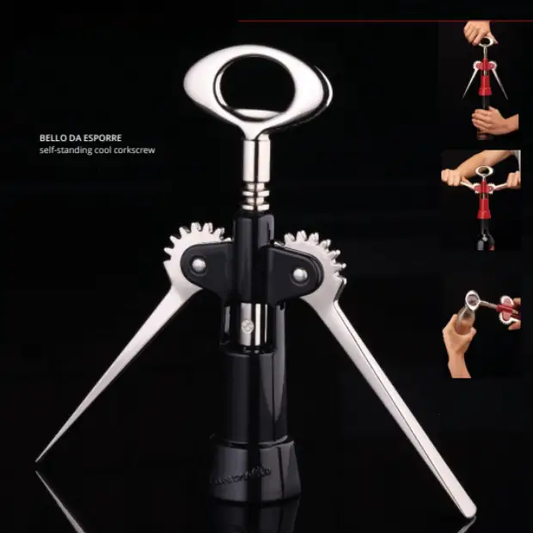
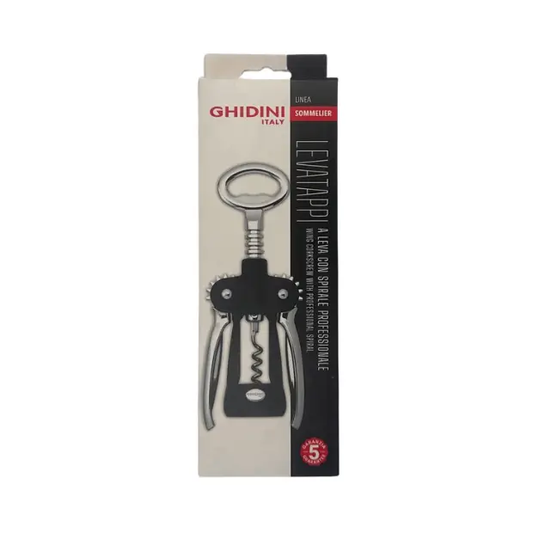
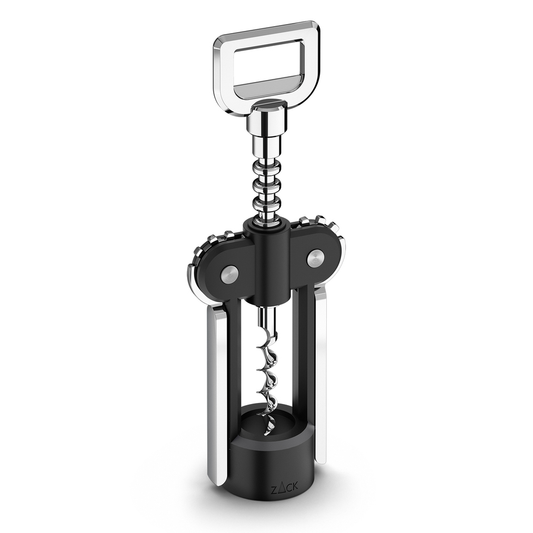
The wing corkscrew — also known as a butterfly corkscrew or double-lever corkscrew — is one of the most recognisable and widely used designs. It features two hinged arms (the wings) that rise as the worm is driven into the cork; pressing the wings down then extracts the cork with a smooth, even motion. Wing corkscrews are intuitive to use, require no particular technique, and are a reliable choice for everyday home use. They are available in a range of finishes, from classic chrome to matte black and brushed steel, making them easy to match to any kitchen aesthetic.
Waiter's Friend (Sommelier Knife)
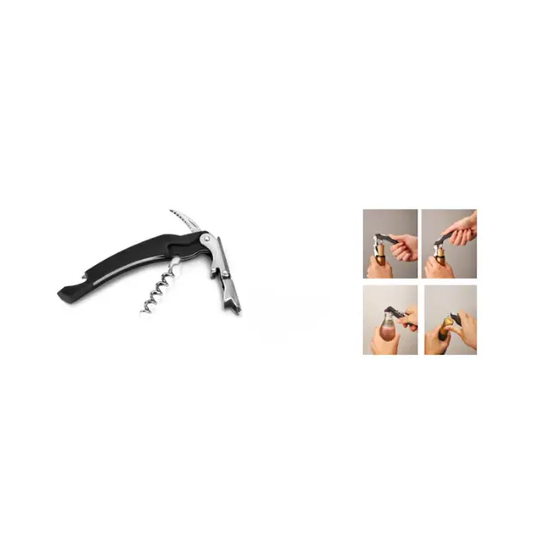
The waiter's friend — sometimes called a sommelier knife or wine key — is the professional's choice and the most compact corkscrew design available. It folds flat like a penknife and typically incorporates a foil cutter and a two-step lever for controlled, clean extraction. In experienced hands, a waiter's friend is the fastest and most precise way to open a bottle of wine. It requires a little more technique than a wing corkscrew but rewards the user with speed, control, and a slim profile that fits easily in a pocket or drawer. Many home wine enthusiasts prefer the waiter's friend once they've learned to use it well.
Lever Corkscrews
Lever corkscrews — sometimes called rabbit corkscrews or vertical corkscrews — use a mechanical lever action to drive the worm into the cork and extract it in a single, effortless motion. They are the easiest type of corkscrew to use, requiring virtually no physical effort, and are an excellent choice for those who open wine frequently, have limited hand strength, or simply want the most convenient option available. Lever corkscrews tend to be larger and more substantial than other designs, and premium models in nickel-plated or stainless steel finishes make a strong visual statement on a bar or countertop.
Novelty and Design-Led Corkscrews
Beyond the functional categories, there is a growing range of design-led corkscrews that prioritise aesthetic character alongside performance. Corkscrews crafted from natural bamboo, for example, bring warmth and sustainability to the bar drawer, while retro-inspired designs add personality and a sense of fun. These are corkscrews chosen as much for what they say about your taste as for what they do — and they make excellent gifts for wine lovers.
How to Choose the Right Corkscrew
The right corkscrew depends on how often you open wine, your level of experience, and what you want from the tool aesthetically. Consider the following:
- Ease of use: If you want the simplest possible experience, a lever corkscrew requires the least effort and technique. Wing corkscrews are also intuitive and reliable for everyday use.
- Speed and precision: If you open wine regularly and want the most efficient tool, a waiter's friend in the hands of someone who knows how to use it is hard to beat.
- Physical comfort: For those with limited grip strength or arthritis, a lever corkscrew is the most accessible option, as it requires minimal hand and wrist effort.
- Aesthetics: Consider where the corkscrew will live. A sleek nickel-plated lever corkscrew suits a contemporary bar setup; a bamboo or retro design adds character to a more eclectic kitchen.
- Gift potential: A well-made corkscrew in a premium finish makes an excellent gift for wine lovers. Look for designs that feel substantial in the hand and come presented well.
Understanding the Worm
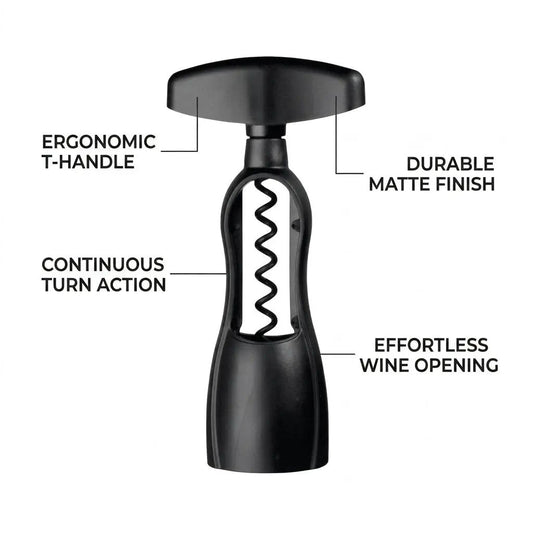
The worm — the spiral helix that penetrates the cork — is the most critical component of any corkscrew. A well-designed worm is made from hardened steel, has a sharp, tapered point, and follows a true helix (rather than a tight coil) that allows it to grip the cork firmly without tearing it. The length of the worm matters too: it should be long enough to penetrate the full depth of a standard cork without breaking through the bottom. When evaluating a corkscrew, the quality of the worm is the single most important factor in determining how cleanly and reliably it will perform.
Caring for Your Corkscrew
A quality corkscrew requires very little maintenance, but a few simple habits will keep it performing well for years. Wipe the worm clean after each use to remove any cork residue, and dry it thoroughly to prevent any surface oxidation. For corkscrews with moving parts — lever mechanisms, folding waiter's friends — an occasional drop of food-safe lubricant on the pivot points will keep the action smooth. Store your corkscrew in a drawer or on a bar rack rather than loose in a utensil pot, where the worm can be damaged by contact with other tools. Most corkscrews are not dishwasher safe — hand cleaning is recommended to preserve the finish and the integrity of the mechanism.
Frequently Asked Questions
What is the easiest type of corkscrew to use?
Lever corkscrews are the easiest to use, as they require minimal physical effort and no particular technique. You simply place the lever over the bottle neck, pull the handle down to drive the worm into the cork, and pull it back up to extract it — the whole process takes a few seconds. Wing corkscrews are also straightforward and intuitive, making them a reliable choice for everyday home use.
What is a waiter's friend corkscrew?
A waiter's friend — also called a sommelier knife or wine key — is a compact, folding corkscrew used by professional sommeliers and bartenders. It typically includes a worm, a foil cutter, and a two-step lever for controlled cork extraction. It is the most portable and versatile corkscrew design, and in experienced hands the fastest way to open a bottle of wine.
How do I remove a broken cork?
If a cork breaks during extraction, the most reliable approach is to reinsert the worm at an angle into the remaining portion of the cork and extract it carefully with steady, even pressure. Alternatively, a two-pronged cork puller (also known as an Ah-So opener) can be inserted alongside the cork and used to lever it out without the worm. If the cork has been pushed into the bottle, it is generally easiest to push it all the way in and pour the wine through a strainer.
Can I use a corkscrew on synthetic corks?
Yes. Most corkscrews work on synthetic corks, though synthetic corks can be denser and more resistant than natural cork, requiring a little more effort to extract. Lever corkscrews handle synthetic corks particularly well due to their mechanical advantage. Avoid using excessive force with any corkscrew on a synthetic cork, as the resistance can cause the worm to slip or the cork to tear.
Are corkscrews suitable as gifts?
Absolutely. A well-made corkscrew in a premium finish — nickel-plated, brushed steel, or a design-led material like bamboo — makes an excellent gift for wine lovers, hosts, and anyone who takes their home bar seriously. Look for designs that feel substantial and considered, and that will look as good on display as they perform in use. A corkscrew paired with a wine stopper or bottle cooler makes a particularly thoughtful gift set.
Do I need a foil cutter with my corkscrew?
A foil cutter is a useful addition to any bar drawer, as it removes the foil capsule from the bottle neck cleanly and without tearing. Many waiter's friend corkscrews include a built-in foil cutter as part of the folding tool. If your corkscrew does not include one, a standalone foil cutter is an inexpensive and practical accessory that makes the bottle-opening process neater and more professional.